


What Is Drone-Based STEM Learning? A Complete Guide for Grades 4 to 8

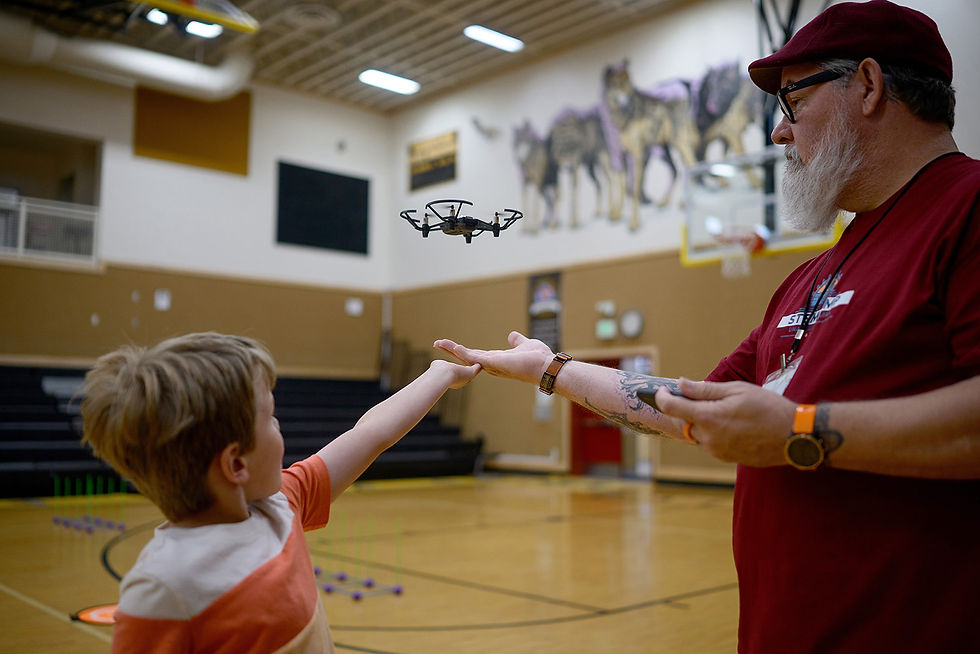
Drone-based STEM learning has become one of the most effective ways to introduce upper elementary and middle school students to real-world science, technology, engineering, and mathematics. Schools across the United States and around the world are adopting drones as classroom tools because they combine hands-on problem solving with coding, engineering, and modern technology applications that students instantly find engaging.
For grades 4 to 8 in particular, drones offer an ideal blend of challenge, creativity, and practical skill development. This guide explains what drone-based STEM learning is, why it is so effective, and how schools can implement programs confidently and safely. It also outlines how the Drone Legends STEM Fundamentals program gives educators a complete, classroom-ready solution built specifically for students in this age range.
Understanding Drone-Based STEM Learning
Drone-based STEM learning is an approach to teaching that uses educational drones, coding activities, and real-flight missions to help students explore key scientific and technological concepts. Instead of learning STEM ideas only through textbooks or lectures, students experience them directly by flying drones, programming movement patterns, collecting data, and solving structured challenges.
This instructional approach speaks to a broad set of learning styles. Visual learners see drone flight paths and models. Kinesthetic learners benefit from hands-on flight operations. Analytical learners thrive when they design algorithms, interpret environmental constraints, or troubleshoot flight results.
What Makes Drones Effective Teaching Tools
Drones serve as an anchor for STEM concepts because they are dynamic, interactive, and relevant to modern careers. A drone is a complete engineering system that touches physics, mathematics, computer science, digital media, and aviation. When used in a classroom environment, it becomes a practical vehicle for students to explore how these domains connect.
Ideal Age Range for Drone-Based STEM Education
Grades 4 to 8 represent a critical period where students benefit greatly from structured, applied problem solving. These students are mature enough to understand the mechanics of flight, basic physics principles, and block-based coding logic. At the same time, they are curious, willing to experiment, and motivated by hands-on technology experiences. Drone-based STEM learning fits this stage of development exceptionally well.
Why Drones Are Powerful Tools for Grades 4 to 8
Drone education resonates with upper elementary and middle school students because it provides tangible results. Concepts that might feel abstract in a worksheet become meaningful when students see a drone respond to code they wrote or adjust its flight based on environmental factors.
Increases Engagement and Motivation
Research consistently demonstrates that hands-on learning increases attention, retention, and persistence. When students work with drones, they gain an immediate sense of accomplishment. They see inputs translate directly into outcomes, which motivates further experimentation and deeper understanding.
Builds Confidence Through Real Flight Skills
Safe, classroom-friendly drones introduce students to the fundamentals of aviation. Students learn pre-flight checks, operational safety, and controlled maneuvers. These experiences build confidence, foster responsibility, and help students understand how technology behaves in real environments.
Supports Key Academic Standards
Drone-based activities can align with national and state-level Science and English Language Arts standards, ISTE technology standards, CSTA computer science standards, and NGSS performance expectations. Core concepts like force, motion, engineering design, computational thinking, and data analysis appear naturally in drone lesson sequences.
What Students Learn in a Drone STEM Program
A high-quality drone STEM program provides measurable academic and practical learning outcomes across several disciplines.
Coding Fundamentals
Block-based coding is a central component of drone STEM education for grades 4 to 8. Students learn:
Variables
Loops
Functions
Conditionals
Refactoring
Algorithmic thinking
Students quickly understand how code shapes drone behavior. Over time, they develop structured thinking skills that apply to all programming languages.
Physics and Engineering Concepts
Drones serve as an excellent model for teaching physics principles such as thrust, drag, gravity, lift, and momentum. Students observe how these forces interact in live flight scenarios. Engineering design concepts emerge during troubleshooting, balancing, and mission planning.
Real-World Drone Applications
Students explore how drone technology is used in fields such as:
Environmental science
Agriculture
Search and rescue
Construction
Media production
Mapping and surveying
These connections help students see drones as essential tools in modern problem solving and career pathways.
Digital Media and Aerial Video Skills
Drone Legends is unique in introducing students to aerial photography and video production at an accessible level. Students learn framing, storytelling, and basic editing, which supports digital literacy and creative communication skills.
Collaboration, Communication, and Critical Thinking
Group-based missions require teamwork. Students take on roles such as Remote Pilot In Command, Visual Observer, and Safety Director. These activities cultivate interpersonal skills that are essential in STEM fields.
What a Drone STEM Lesson Looks Like in the Classroom
Drone-based STEM instruction follows a structured format that keeps students engaged, focused, and safe.
Mini-Lesson and Safety Review
Lessons begin with a short instructional section. Teachers introduce key concepts, demonstrate safe drone handling, and review the day’s mission objectives. This preparation ensures that students have clear expectations.
Guided Flight or Coding Mission
Students carry out missions that match the lesson goals. Examples include:
Programming a flight path
Navigating around a barrier
Simulating a real-world scenario such as a delivery or survey
Recording and analyzing aerial footage
These missions give students practical experience applying STEM principles.
Collaboration and Reflection
After the mission, students reflect on what worked and what they want to improve. They may adjust code, refine strategies, or redesign approaches. This reflection reinforces learning and supports deeper understanding.
Drone-based lessons work well in classrooms, makerspaces, gymnasiums, and after-school environments. The flexible nature of the technology makes it suitable for a wide range of educational settings.
Safety, Structure, and Classroom Management
Safety is a primary concern for teachers who are new to drone-based instruction. When implemented correctly, drone STEM programs can operate safely and efficiently.
Safe Drone Types for Schools
Education-grade drones are lightweight, feature propeller guards, and are designed specifically for indoor learning environments. These features significantly reduce risk and allow teachers to focus on instruction.
Classroom Management Systems
Effective drone classrooms use:
Clearly assigned student roles
Structured mission stations
Pre-flight and post-flight checklists
Defined takeoff and landing areas
This structure creates a predictable environment that supports both safety and learning.
Technology Setup and Space Requirements
Schools do not need extensive space or specialized facilities. Most drone missions can be conducted in ordinary classrooms or small common areas. Only minimal setup is required beyond standard charging stations and cleared floor space.
Who Should Implement a Drone STEM Program
Drone-based STEM learning is valuable to multiple educational audiences.
Grade 4 to 8 classroom teachers
STEM and science specialists
Curriculum and instructional leaders
After-school and enrichment coordinators
Principals and instructional coaches
CTE program directors
Each group benefits from the unique combination of technology, standards alignment, and student engagement that drones provide.
Introducing Drone Legends STEM Fundamentals
Schools seeking a complete, ready-to-implement drone STEM solution for grades 4 to 8 often select STEM Fundamentals from Drone Legends. This program is specifically designed for upper elementary and middle school learners and is built by experienced educators who understand classroom needs.
Designed for Grades 4 to 8
STEM Fundamentals offers a mission-based curriculum that blends hands-on learning, project-based challenges, and real-world applications. Each lesson includes slides, videos, assessments, and detailed teaching guides.
Compatible With Tello and FlyCode
The program operates on the Tello platform and FlyCode, the Drone Legends proprietary coding app. FlyCode provides a simple, intuitive environment where students can write and test code that controls drone movement with precision and accuracy.
Trusted Worldwide
More than 1,500 schools in the United States, Australia, New Zealand, Guam, and Malaysia have implemented the Drone Legends STEM Fundamentals program. Fresno Unified School District adopted it as part of its aviation pathway initiative, demonstrating its alignment with workforce preparation.
Complete Teacher Support
Teachers receive everything required for a successful implementation. This includes professional learning, step-by-step curriculum, pre-built instructional materials, and technical guidance.
To explore the full program, visit dronelegends.com/grades-4-8.
How Schools Get Started
Schools can integrate drone STEM learning smoothly when they follow a structured rollout plan.
Begin with STEM Fundamentals kits that include drones, batteries, charging hubs, and accessories.
Use the complete lesson sequence provided by Drone Legends.
Schedule optional professional development to build teacher confidence.
Plan a six to eight week instructional unit or an after-school club structure.
Evaluate student outcomes and gather feedback for expansion.
This pathway requires minimal preparation from teachers and ensures a strong instructional foundation.
Questions? Check out our Frequently Asked Questions.
Final Thoughts
Drone-based STEM learning provides a powerful, engaging, and practical way for students in grades 4 to 8 to explore technology, science, engineering, and mathematics. It builds confidence, enhances critical thinking, and prepares students for future academic and career pathways. Schools that implement drone programs benefit from strong student engagement and high instructional value.
Drone Legends STEM Fundamentals offers a structured, comprehensive solution for schools ready to adopt drone technology in the classroom. With mission-based curriculum, standards alignment, and complete teacher support, it provides everything needed for successful implementation.
Contact us today to get your drone STEM program up and flying!


Comments